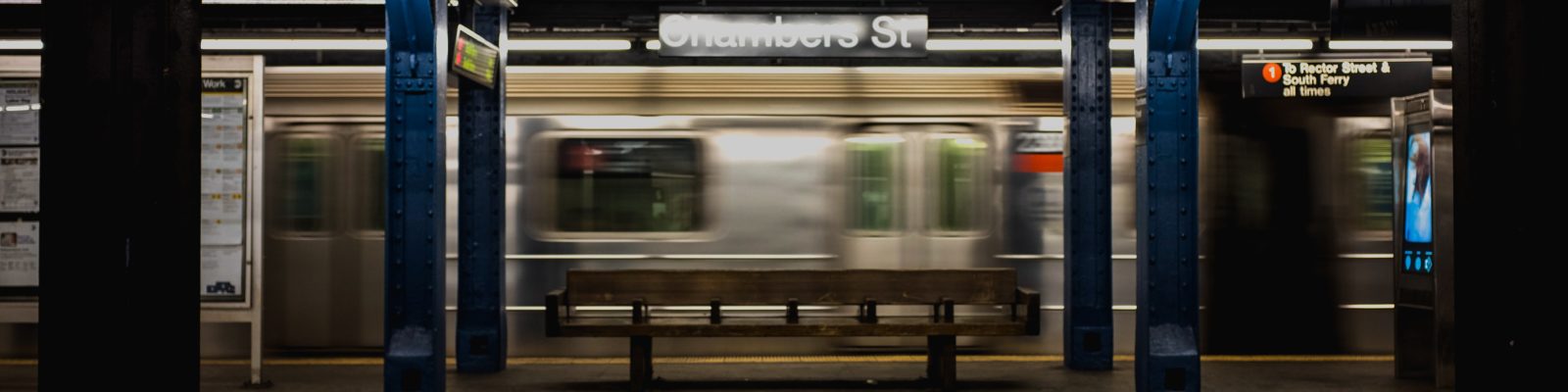
No public list tells you which NYC buildings allow temporary walls in 2026. The answer sits in your lease, your management company’s written rules, and, in a co-op or condo, the board’s house rules. In a Murray Hill or Financial District doorman rental, management decides. In a Park Slope brownstone, the owner downstairs often decides alone.
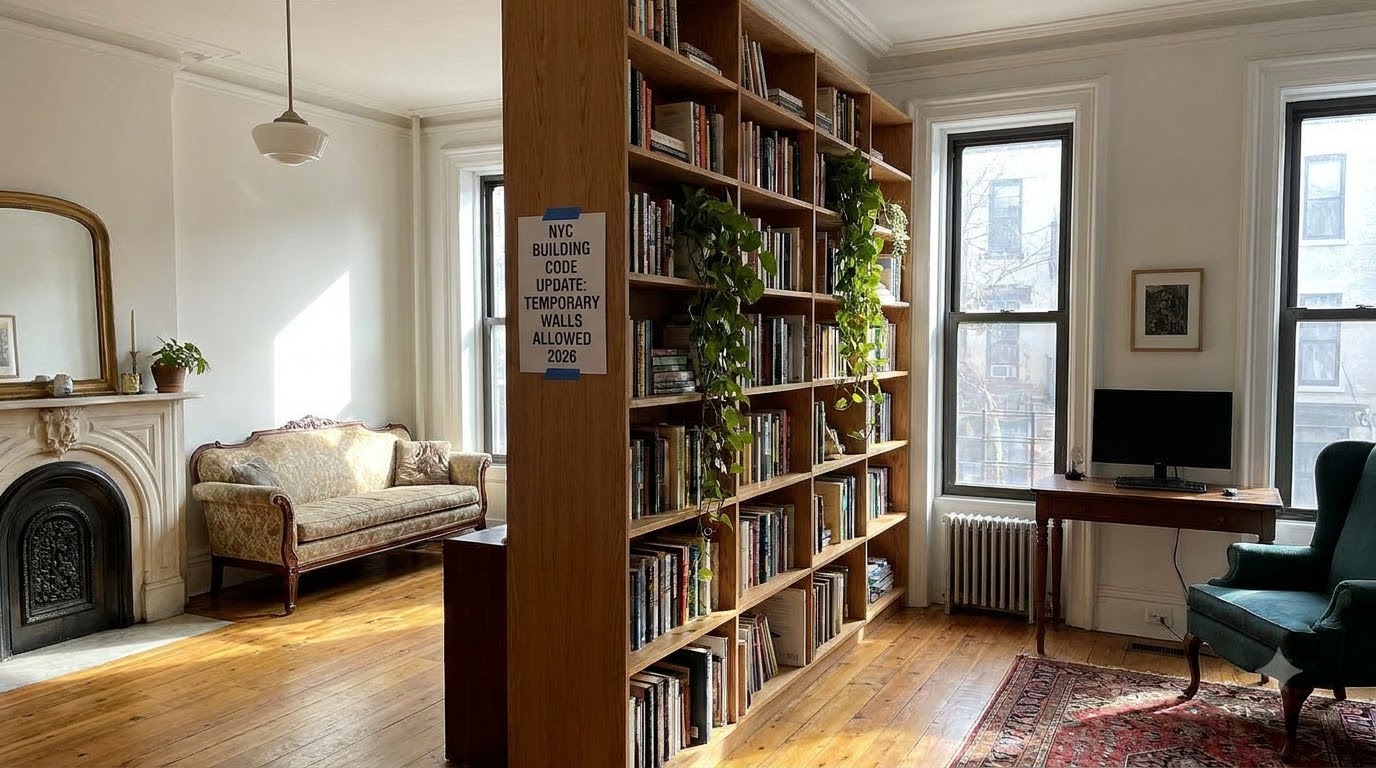
Who approves a wall depends on who runs the building.
Once you have a yes, a pressurized wall from Temporary Walls NYC starts from $2,250, with an 8 ft ceiling, up to 12 ft wide, and a standard swing door included. A bookcase wall starts from $3,250. This guide shows how each building type handles approval, what landlords have said in public, and what to ask before you sign a lease.
Quick Facts
- No current public list of wall-friendly NYC landlords exists. The last widely cited one is from 2018.
- Buildings that say yes often add conditions, such as a 12-inch gap at the ceiling or an insured installer.
- Pressurized wall: from $2,250 (8 ft ceiling, up to 12 ft wide, standard swing door). Bookcase wall: from $3,250.
- Your landlord’s yes and a NYC DOB permit are two separate questions.
- Questions? Call +1 917-789-5537. We respond the same day.
Which NYC Buildings Allow Temporary Walls in 2026?
It depends on who owns and runs the building, not on the neighborhood. A pressurized wall is a floor-to-ceiling partition held in place by pressure, with no holes and no drilling into walls, floors or ceilings. Even so, almost every NYC lease treats it as an alteration that needs written consent.
Here’s who decides in each common building type, and what to expect.
| Building type | Who says yes | What to expect |
|---|---|---|
| Doorman rental (Murray Hill, Midtown East, Financial District) | The management company | Often has a written wall policy. May require a ceiling gap, an insured installer, and removal at move-out. |
| Rent-stabilized walk-up (Washington Heights, Astoria, the Bronx) | The landlord | The lease’s alterations clause still applies. Get consent in writing. |
| Owner-occupied brownstone or two-family (Park Slope, Bed-Stuy, Staten Island) | The owner | Often a faster, informal yes. Still get it by email. |
| Co-op (Upper West Side pre-war, Riverdale) | The unit owner, then the board | Board rules sit on top of the owner’s yes. Expect weeks, not days. |
| Condo rented from an owner (Long Island City, Downtown Brooklyn) | The unit owner and building management | The owner can say yes, but the building’s rules still apply. |
| Public or subsidized housing (NYCHA, HUD-assisted) | The housing manager | Ask the management office in writing before anyone measures. |
Which NYC Landlords Allow Flex Walls?
The last public list is from 2018, so treat it as a lead, not a yes. That December, Brick Underground asked brokers and management companies which landlords allowed temporary walls. Many companies didn’t confirm what brokers told the reporter.
Here’s what that reporting said about a few large Manhattan landlords:
| Landlord | Reported in 2018 | Source |
|---|---|---|
| TF Cornerstone | Walls allowed in many rentals. Some buildings allowed full height, others only with a 12-inch gap. | A broker |
| Stonehenge NYC | Partial walls only, with a 12-inch gap at the ceiling. | Reported by Brick Underground |
| UDR | Moved from full walls to a 12-inch gap rule. | A broker (company didn’t confirm) |
| Related Companies | Not a standard offering. Requests reviewed case by case. | Company spokesperson |
| Brodsky Organization | No walls. Bookcases and furniture dividers allowed in some buildings. | Company spokesperson |
These are 2018 reports, not current policy. Rules change with ownership, management and the rental market. Confirm in writing with your building.
Policies swing both ways. In 2010, Stuyvesant Town told tenants to replace their walls with code-compliant partitions. A few years later, the same complex was marketing “flex” units. So a building’s reputation tells you little. Its current written policy tells you everything.
What Rules Do NYC Buildings That Allow Temporary Walls Set?
Most set rules on height, doors, the installer and move-out. Brokers and landlords quoted in past reporting describe the same handful of conditions again and again:
- Height. Some allow a full floor-to-ceiling wall. Others require a gap at the top, often 12 inches.
- Doors. Some allow a standard swing door. Some allow only a sliding door. Some allow no door at all.
- Installer. Some name an approved company. Others accept any installer with a certificate of insurance.
- Move-out. Most want the wall removed before you leave, and the super may check before your deposit comes back.
Get these rules in writing before you ask for a quote. A full-height wall quote is useless in a building that only allows a 12-inch gap. Send us the rules and we’ll tell you which of our walls fits them. If light is the worry, a plexiglass top is a + $450 add-on.
Not sure what your building allows? Call us at +1 917-789-5537. Tell us the address and the management company. We’ll tell you what to ask and which of our walls fits the rules.
How Do I Find Out If My Building Allows a Temporary Wall?
Ask management in writing, and check the lease first. Worried that asking will flag you as a problem tenant? It won’t. A clear, specific request is what most managers want to see. Work through these steps before you sign or book an install:
- Read the alterations clause in your lease. Most NYC leases bar alterations without the landlord’s written consent.
- Ask management, not the broker. A listing that says “flex” isn’t approval. Use our guide to asking your NYC landlord for permission for a ready-to-send email.
- Ask four direct questions. Full height or a gap? Is a door allowed, and what kind? Approved installer or any insured company? What are the removal terms?
- In a co-op or condo, ask for the house rules. Ask whether the board needs an alteration agreement for a temporary wall.
- Look up the Certificate of Occupancy. It states the building’s legal use and occupancy. You can search by address on the NYC Department of Buildings Certificate of Occupancy page. Buildings from before 1938 often don’t have one.
- Get the yes by email, with the wall type named. “A pressurized wall with a swing door” protects you better than “a wall is fine.”
What If Your Building Says No to a Full Wall?
Ask about a bookcase wall or a freestanding wall. Some landlords who refuse a full wall will accept a divider that works more like furniture. That’s what Brodsky described in 2018.
A bookcase wall starts from $3,250 and gives you storage on one side. A freestanding wall works more like furniture and is quoted after we see the space. Ask your building which one it accepts before you choose.
Does Building Approval Mean You Skip the NYC DOB?
No. Your landlord’s yes and the NYC Department of Buildings (NYC DOB) are separate. No NYC law exempts a temporary wall from DOB permit rules, and NYC DOB decides each job on its own.
Our NYC DOB temporary wall rules guide covers windows, room size and exits. We’re a licensed general contractor and can coordinate the DOB filing if one is needed.
What Happens to the Wall When You Move Out?
Most buildings want it removed before you leave. Because there are no holes and no drilling, removal is usually simple. Occasionally, a small amount of patch and paint work is needed after removal.
Removal is quoted at the site measure. Our move-out guide covers timing and your security deposit.
Frequently Asked Questions
Which NYC buildings allow temporary walls in 2026?
No current public list exists, so each NYC building decides for itself. Doorman rentals in Manhattan usually follow a written management policy. Brownstone owners in Brooklyn often decide alone. Co-ops and condos add board rules on top. Ask management in writing whether a full-height wall, a wall with a ceiling gap, or a bookcase wall is allowed before you book an install.
Do NYC luxury rental buildings allow flex walls?
Some NYC luxury rentals allow flex walls, but many set conditions. In 2018 reporting, several large Manhattan landlords required a 12-inch gap at the ceiling, and some banned doors or full walls. Policies change with ownership and the market. Treat any list as a lead, and get the current rule from your management office in writing.
How do I find out if my NYC building allows a temporary wall?
Read the alterations clause in your NYC lease, then email the management company, not the broker. Ask whether a full-height wall is allowed, whether a door is allowed, which installers they accept, and what the removal terms are. In a co-op or condo, ask for the house rules too. Get the answer by email with the wall type named.
Can I install a temporary wall in a NYC co-op or condo?
Yes, if the unit owner and the board both approve it. In a NYC co-op, the board’s house rules sit on top of the owner’s consent, and some boards ask for an alteration agreement. Board approval can take weeks, since many boards meet monthly. Start the request early, and ask exactly what wall type and door the board will accept.
What can I do if my NYC building won’t allow a full temporary wall?
Ask whether the building accepts a bookcase wall or a freestanding wall instead. Some NYC landlords who refuse full walls allow dividers that work like furniture. A bookcase wall from Temporary Walls NYC starts from $3,250 and adds storage. A freestanding wall is quoted after a site visit. Confirm the building accepts your choice in writing first.
